Day 7 - Thursday
Today I was in lower limb orthopaedic surgery. The consultant was very friendly and the SpR with her was the one whom i had been with to do the hip screwing on Wednesday. I did another 3 venflon drip insertions, two of which were successful first time, and one of which wasn't! I also spent a bit of time holding face masks and trying to insert the LMA breathing tubes, which is much trickier than you might think!
The theatre being used today was up in the old part of the hospital and had a huge curved bay at one end with many windows, with a lovely view of the multi-storey car park and the back of the new building at the hospital. The operations were fairly simple, but the consultant surgeon still quizzed me about the nerves of the lower limb whilst he was blocking them with local anaesthetic. I doubt i will ever forget that the sagital nerve invervates the thigh and the femoral nerve innervates the lower leg through its two branches - common peroneal and tibial branches.
The regional anaesthetic idea is a good one, since injecting the anaesthetic into the nerve at the top of the leg gives complete pain relief (but also some loss of feeling a movement) for up to 2 days following the operation. this lessens the need for the patents to be on opiate painkillers, which can make them feel sick.
handily, this list was finished by 2.30pm, so i got an early finish.
Day 8 - Friday
Today I was with one of the SpR's for urology surgery. there were only two cases on the morning list, and the first lady was already anaesthetised when I arrived (on time) at 8.55am. Thus I got to see how the monitoring of her operation was different because she was having a kidney operation, and thus needed to lie on her front (prone). She was quite ill and had many previous operations, so when the surgeons discovered she had pus in her kidney, they decided to abort the planned procedure, give her antibiotics and wait until the infection cleared up before attempting the operation again.
The second man was very anxious. he was only having a spinal anaesthetic, because in the past he has reacted very badly to a general anaesthetic. The operation went off fine, with him feeling no pain. However, as we started to disconnect the monitoring, he complained of chest pain around the bottom of his ribs. His ECG and blood pressure were normal, so we could rule out a heart attack. the surgeons came back to check on his operation, but that was way down in his bladder, so it seems unlikely that it was connected to the pain. The man was also sick and sweating, but his blood sugar level was normal. An Chest X-Ray was inconclusive, and so the SpR ordered some blood tests. We then had a fun tutorial on fluid balance, acid-base balance, heart conditions, and muscle relaxant drugs. the patient had still not improved, so I was sent home as there was no afternoon list, and no obvious 'medical' or 'surgical' cause of the pain, so the man was just on close observation.
Showing posts with label spinal. Show all posts
Showing posts with label spinal. Show all posts
Friday, July 27, 2007


Wednesday, July 18, 2007
Elective - day 2 (maternity)

Today was my first ever visit to a labour ward. I was there to see what the anaesthetists do, although I also got to see 2 C-sections as well. It's much more umm, well, eerr, brutal than I thought. However, either way, 2 7lb babies were born fit and healthy so it can't be bad for them.
I don't know if today was a slow baby day, or if it's normally quiet, but there were only 4 ladies required anaesthetic intervention - either for a C-section, or for epidurals, so I got 3 or 4 tutorials on different aspects of anaesthetics. I got to spend time with an SHO, SpR and Consultant and got to see their different styles but also the high degree of teamwork they have.
- The difference between a spinal and an epidural anaesthetic.
- What the things to look out for when anaesthetising someone who is fit, healthy and awake.
- How they manage a patient who has an 'allergy' to one of the commonly used drugs.
 SHO Teaching & careers advice
The SHO I was with for that part of the day was really helpful at explaining why these things are important and why it is good to pick them up as a medical student, and not wait til you are a JHO. She also explained some of the simpler things about anaesthetics and the anatomy of where the different needles go. She also gave some advice on why Anaesthetics is a good choice as a career and also how to manage your FY1 choices and accepting that you are an admin clerk and spend most of your time monitoring things, checking up on things or ordering test fro other departments, She also said about knowing the patients on you ward because more senior staff are off at clinics, research etc, and it is down to you to know who slept well or didn't, whose birthday it is, whose family members are away and haven't been to see them, and things like that which help you to explain things to the consultant. Also getting to know some patient history and circumstances is important.
 Seeing tomorrows patients
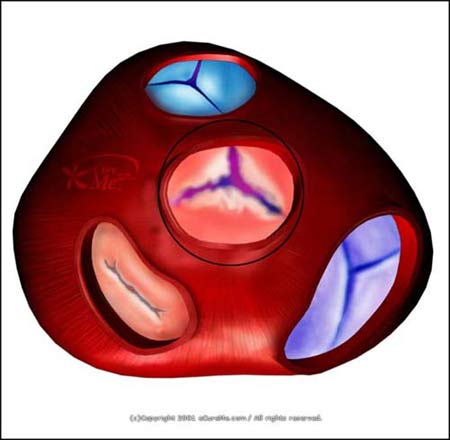
In the afternoon we were a bit quiet, so the SHO took me over to see the 2 patients who are being operated on and whose anaesthatist I am with tomorrow. Both are having heart surgery, so I had a look in their notes and noted the drugs they were on and went to see them so they would know who i was and why I would be in theatre tomorrow (if they care at that point!). Upon coming home and checking the drugs they are on, one patient is on Clopridogel, which is a drug which aims to prevent your blood clotting (an anti-platelet). The BNF and other textbooks recommend stopping it 7-14 days prior to surgery unless it is needed for anti-platelet reasons. So that case may be a little interesting anyway. When I went to meet that patient, who is having an aortic valve replacement, and potentially a CABG - the consent sheet and referral letter said different things! - I had a listen to her chest and the murmur was really loud and obviously diastolic. Even the SHO said it was one of the best she had heard.
Subscribe to:
Posts (Atom)